





Quick answer
A federal judge in Rhode Island blocked USCIS from using blanket country-based policies to freeze green cards, citizenship applications, work permits, asylum decisions, and other benefits for people from 39 countries. The ruling does not approve cases automatically. It means USCIS must restart adjudications and judge each case under the normal law, unless a higher court pauses the order.
For months, thousands of immigrants did exactly what the government says people should do: they filed applications, paid filing fees, attended biometrics, waited for interviews, and tried to keep their lives in legal order. Then USCIS stopped moving many of those cases because of where the applicant was from.
On June 5, 2026, U.S. District Judge John McConnell in Rhode Island struck down that approach. The ruling blocked Trump administration policies that had frozen or burdened applications for asylum, work permits, green cards, naturalization, and other immigration benefits for nationals of 39 countries tied to the administration's travel-ban framework.
The practical point is simple: if your USCIS case was stuck because of a nationality-based hold, this ruling may put it back in motion. But it is not a magic approval. It is a chance to get your case decided again.
Important
The government can appeal and may seek a stay. If your case was frozen, use this window carefully. Check your case status, update your evidence, preserve proof of the delay, and talk to an attorney before making travel or filing decisions.
What the court blocked
The challenged policies grew out of USCIS actions after the November 2025 shooting of two National Guard members in Washington, D.C. USCIS imposed sweeping holds on asylum adjudications and directed officers to treat nationality from certain countries as a negative factor in immigration benefit cases.
According to reporting from Courthouse News, Reuters, Newsweek, and PBS, the court found that USCIS had barred people from 39 countries from receiving decisions on applications for asylum, work permits, green cards, citizenship, and other benefits. The court described the resulting limbo as unlawful and rejected the agency's attempt to justify the policies as a blanket national-security measure.
The ruling matters because USCIS is supposed to decide individual applications under statutes and regulations. It cannot simply take an entire group of pending applicants, put them on ice indefinitely, and call that normal adjudication.
Which cases may start moving again?
The ruling is broad. It is not limited to asylum. The paused or burdened cases included several categories Modern Law Group sees every week:
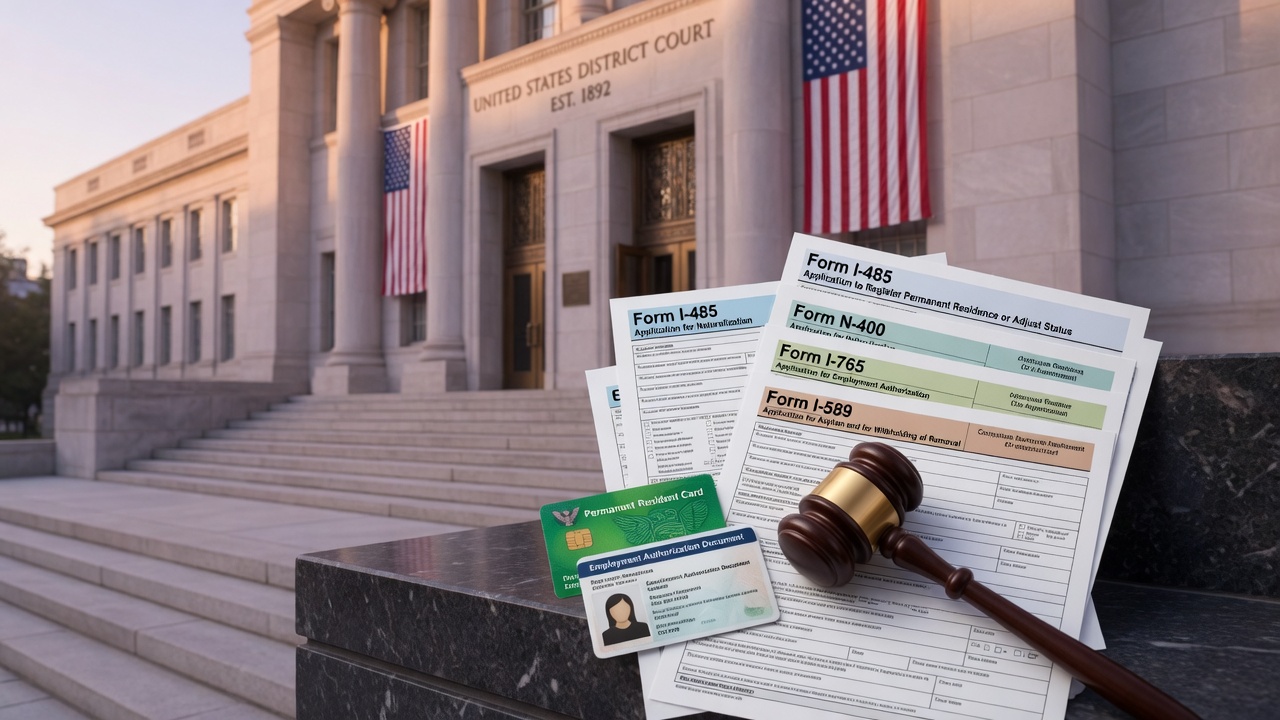
- Green card adjustment of status cases, including Form I-485 filings for family, employment, asylum, refugee, and other immigrant categories.
- Naturalization cases, including Form N-400 applications and citizenship ceremonies that were reportedly cancelled or delayed for affected applicants.
- Work permits, including Form I-765 employment authorization applications and renewals.
- Affirmative asylum cases, including delayed interviews and decisions on Form I-589 applications.
- Other USCIS benefit requests where the hold or negative-factor policy was applied because of nationality.
If your case fits one of those categories and you are from an affected country, the order may be the reason your case begins moving again. That could mean an interview notice, a request for evidence, a biometrics notice, a decision, or a rescheduled oath ceremony.
What the ruling does not do
Do not confuse a processing victory with an approval. The order does not say every affected applicant is eligible. It does not waive inadmissibility grounds. It does not erase prior removal orders. It does not guarantee work authorization. And it does not necessarily end every travel-ban or consular-processing restriction.
What it does is remove the blanket USCIS policy that kept cases from being adjudicated normally. Officers still review eligibility, discretion, criminal history, immigration history, fraud concerns, security checks, public-charge issues where applicable, and the specific requirements of the benefit requested.
That distinction matters. A frozen case can feel like a denial, but legally it is different. Now that the hold has been blocked, the next fight is often the merits of the underlying application.
Why this is different from the earlier asylum-only update
Earlier in 2026, USCIS partially lifted the asylum freeze for applicants who were not from travel-ban countries. That was an asylum-processing development. This June ruling is bigger.
This ruling reaches the broader benefits freeze and nationality-based negative-factor policies. It covers work permits, green cards, naturalization, and other USCIS benefits, not just affirmative asylum. If you read our earlier article on USCIS resuming asylum decisions, think of this as the next stage: the court is now addressing the broader USCIS benefits machinery.
What affected applicants should do now
1. Check your USCIS account and mail immediately
USCIS may begin issuing notices quickly if the order remains in effect. Check your online account, case status page, email, and physical mailbox. If you moved, file an address change and confirm the address on every pending case.
2. Save proof that your case was frozen
Keep screenshots, notices, congressional inquiry responses, attorney correspondence, and any USCIS messages showing that your case was delayed because of a hold. If the case remains stuck, that evidence may support a follow-up inquiry, mandamus strategy, or administrative request.
3. Prepare updated evidence before USCIS asks
A case that sat frozen for months may now move fast. For a green card case, update medical exam strategy, financial documents, marriage evidence, criminal-disposition records, and eligibility evidence. For naturalization, update travel history, tax documents, selective service issues, and good moral character evidence. For asylum, update country-conditions evidence and personal declarations.
4. Do not assume travel is safe
If you are from one of the affected countries, do not travel internationally without legal advice. A USCIS processing order is not the same as an entry guarantee. Travel can trigger inadmissibility issues, abandoned applications, consular delays, or problems under separate travel-ban rules.
5. Consider a congressional inquiry or legal demand if nothing moves
If your case remains frozen after the order, a congressional inquiry may help create a record. In stronger delay cases, a carefully prepared mandamus lawsuit may be an option. The point is not to flood USCIS with random messages. The point is to build a clean record showing that the old blanket hold is no longer a lawful reason for inaction.
What we see in practice
When a broad USCIS hold lifts, the first movement is often uneven. Some applicants get notices within days. Others wait weeks. Some receive RFEs because the file went stale during the freeze. The families who are ready with updated documents usually respond faster and avoid turning a delay problem into an evidence problem.
Green card cases: what to watch
For adjustment applicants, the biggest risk is stale evidence. A pending I-485 may need updated medical documentation, updated financial support documents, fresh marriage evidence, or new criminal-disposition records. If the case has been pending long enough, USCIS may also ask whether circumstances changed since filing.
Family-based applicants should make sure the relationship evidence is current. Employment-based applicants should confirm the job offer, employer support, and underlying immigrant petition posture. Asylum-based adjustment applicants should be ready to prove continued eligibility and absence of disqualifying issues.
If USCIS issues a request for evidence after the freeze, treat it seriously. A case that was delayed by policy can still be denied for an incomplete response.
Naturalization cases: ceremonies and N-400 decisions
Courthouse News reported that naturalization ceremonies were cancelled for some affected applicants who were close to becoming citizens. Those applicants may now see oath ceremonies rescheduled. Others may receive interview notices or decisions that were held back.
For N-400 applicants, this is the time to review travel since filing, arrests or citations, tax compliance, child support, selective service, and any changes in marital status. USCIS can question developments that happened while the case was frozen.
If your oath ceremony was cancelled, do not just wait passively. Ask for a written update, keep the cancellation notice, and consider an attorney inquiry if the case does not move.
Work permits: why timing matters
Work authorization is where delays cause immediate damage. A frozen I-765 can cost someone a job, a driver's license renewal, health insurance, or the ability to support a family. The ruling may restart EAD processing, but that does not mean every card appears overnight.
If your EAD is expiring or already expired, review whether you qualify for an automatic extension, whether your category is still eligible, and whether a renewal is already pending. Employers may need updated documentation for Form I-9 purposes. Do not guess. Work-permit timing mistakes can create employment and immigration problems at the same time.
Asylum applicants: the freeze fight is not over for everyone
Asylum applicants were at the center of the initial freeze, but the June ruling may affect both the global asylum hold and nationality-based policies. If your affirmative asylum case was paused, make sure your evidence is current and your address is correct. If you are in immigration court, remember that defensive asylum follows a different track through EOIR, although country-based policy changes can still affect strategy.
For many asylum seekers, the hardest part is not only legal uncertainty. It is life uncertainty: no decision, no stable work authorization, no family planning, and no way to know whether the government is even looking at the file. This ruling is important because it attacks that limbo directly.
Can USCIS still deny affected cases?
Yes. USCIS can still deny a case for normal legal reasons. The court order does not eliminate eligibility rules. It does not stop fraud investigations. It does not stop security checks. It does not prevent officers from considering case-specific facts.
What USCIS should not do, while the order stands, is rely on the old blanket policies as a substitute for individual adjudication. Nationality alone should not operate as an indefinite pause button.
What if the government appeals?
The government can appeal to the First Circuit and ask for a stay. A stay could pause some or all of the ruling while the appeal proceeds. That is why affected applicants should act now, but act carefully.
If your case moves, respond on time. If USCIS sends a notice, do not miss it. If your case remains stuck, document the continued delay. If the appeal changes the landscape, having a clean record will matter.
Practical checklist for affected families
- Check every pending receipt number on the USCIS case-status page.
- Log into your USCIS online account and save screenshots.
- File AR-11 address changes if you moved.
- Gather updated evidence before an RFE arrives.
- Save proof of any cancelled interview, oath ceremony, or delayed work permit.
- Talk to an attorney before international travel.
- Consider a congressional inquiry if the case remains frozen.
- Review whether mandamus makes sense if USCIS still refuses to act.
Frequently Asked Questions
Did the court order USCIS to approve green cards and citizenship cases?
No. The court ruling does not approve any individual case. It vacates the blanket policies that stopped or delayed adjudications and requires USCIS to process cases under the normal law instead of an across-the-board nationality hold.
Which immigration benefits were affected by the USCIS freeze?
The blocked policies affected asylum decisions, employment authorization, adjustment of status green card cases, naturalization applications, and other USCIS benefits for people from the 39 listed countries, as well as a broader asylum hold.
Who benefits from the June 2026 ruling?
The ruling most directly helps people from the affected countries whose pending USCIS cases were paused or treated negatively because of nationality. It may also help asylum applicants whose cases were caught in the broader global asylum hold.
Can the government appeal the ruling?
Yes. The government can seek review in the First Circuit and may ask for a stay. Applicants should move quickly while the order remains in effect, but should not assume the litigation is over.
What should I do if my case was frozen?
Save proof of the delay, check your USCIS account and mail, update your address, prepare updated evidence, and consider a congressional inquiry or legal action if the case remains stuck despite the ruling.
Does this ruling end the travel ban?
No. The ruling addresses USCIS benefits-processing policies tied to the travel-ban countries. It does not necessarily eliminate all entry restrictions or consular-processing limits under the travel ban itself.
If your green card, citizenship, asylum, or work permit case was frozen because of the USCIS travel-ban-country policies, call Modern Law Group at (888) 902-9285. We can help you understand whether the ruling affects your case, what evidence to update, and when a stronger legal push may be appropriate.
📚 Related Articles
- USCIS Resumes Asylum Decisions: Freeze Lifted for Non-Travel-Ban Countries
- EAD Employment Authorization Delays: What to Do When Your Work Permit Is Stuck
- Green Card Interview Mistakes That Can Delay or Deny Your Case
- N-400 Citizenship Interview 2026: What to Expect
Need help with a delayed USCIS case? Contact our immigration attorneys at Modern Law Group.
Was Your USCIS Case Frozen?
The court ruling may reopen a path forward. Get case-specific advice before USCIS issues a notice, RFE, or decision.
Schedule a Consultation